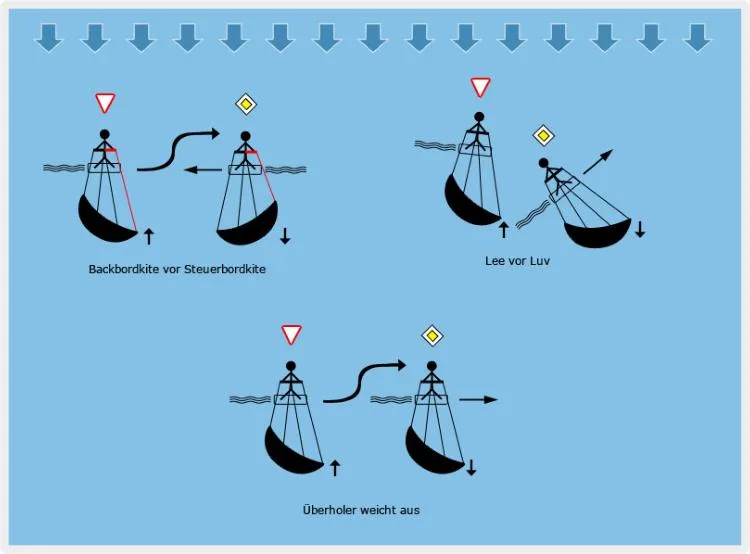
Windsurfing, winging and windfoiling all fall under the windsurfing rules. When in doubt: slow down, give way early and clearly, and always avoid a collision.
01
Sail on port has right of way
When courses cross, the board with its sail on the port side (left) has right of way: wind from the right, right hand forward on the boom. The board with its sail on starboard keeps clear, best by passing behind.
Port — right of way over — Starboard
02
Same side: leeward before windward
When two surfers have their sails on the same side and come close, the leeward surfer has right of way. The windward one, closer to the wind, keeps clear.
Leeward — right of way over — Windward
03
Overtaker keeps clear
Whoever catches up from behind keeps clear: pass at a good distance and only cut back in once the way is free. The surfer ahead holds their course.
Ahead — right of way over — Overtaker
04
Dredging comes first
A rule of our spot: dredgers and work boats always have right of way over water sports.
Dredger — always first — Water sports
Right of way
Keeps clear
Wind
Important: having right of way never means you may let a collision happen. Keep a lookout, keep your distance and hold a predictable course. Only jump, gybe or manoeuvre when there is room.
Zones & access
Who may go where?
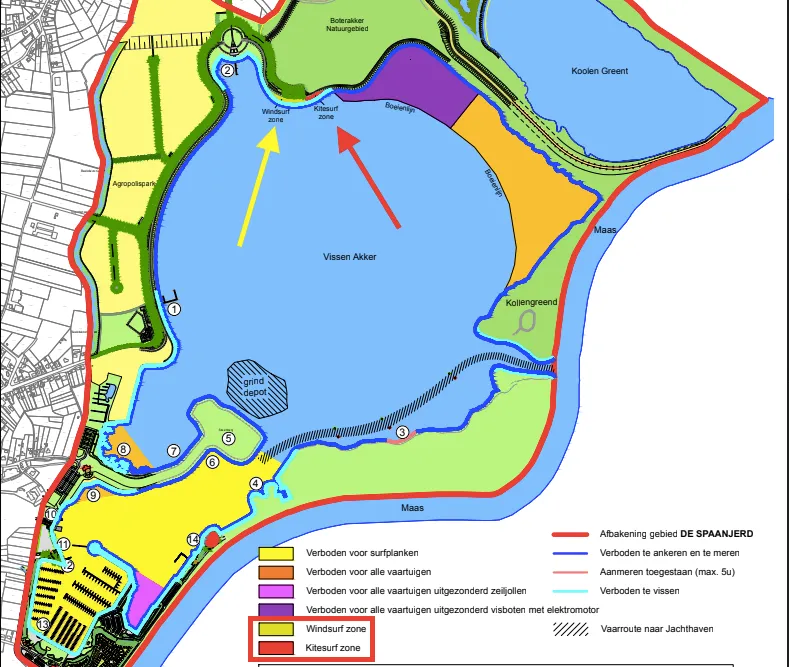
01Members onlyThe surf beach and the closed grounds are for holders of a valid Masurfspot membership card only.
02Your sportMembers practise the sport they are registered for: a windsurfer may not kitesurf.
03Kites on the kite beach onlyLaunching and landing kites is only allowed on the kite beach. Kiting in the nature reserve is strictly forbidden.
04Respect each otherAnglers, boats, swimmers, paddlers, windsurfers, wingers and kiters share the water. Give each other room.
Access for members onlyParking and access to the water
9 tips for kitesurfing
These guidelines come from the analysis of nearly a hundred kitesurfing incidents. They won't prevent every danger — stay careful.
01
Distance is your best friend
Keep at least 60 metres away from the beach, boats, buildings, power pylons and other hard objects. Depower your kite as early as possible when danger looms.
02
Keep an eye on the weather
Check the forecast and wind warnings beforehand and watch for changes. If a squall or gust is coming: head straight to shore, get your kite down and secure it.
03
Take lessons
Build up experience at a good kitesurfing school, guided by experienced instructors. Lessons cannot be given at Masurfspot itself.
04
Check your gear
Lines undamaged, correctly attached, free of knots and loops. Repair any damage to your kite before you launch it again.
05
Use safety gear
Helmet, impact vest, a tested kite leash and a reliable chicken loop with quick release. Test the quick release regularly under load.
06
Be careful in strong wind
As a beginner, stay below 5 Beaufort (22 knots or more). The forces increase enormously and the margins get small.
07
Launch with a helper
An experienced helper who uses the same signals prevents crashes and injuries.
08
Kite low, get away from shore fast
Don't stand on the beach or near hard objects with your kite in the air: a gust can drag you along in no time.
09
Look out for each other
Help other kiters and point out mistakes in a friendly way. That keeps the spot open for everyone.
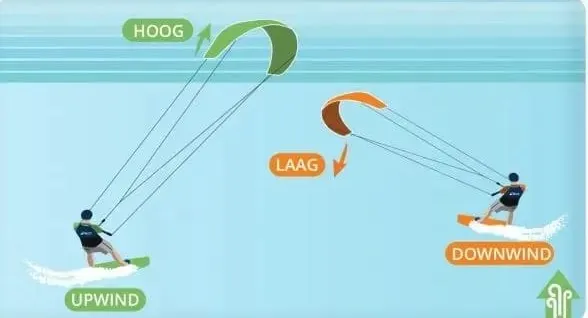
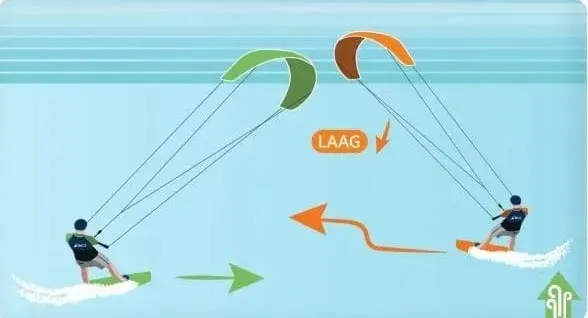
Whoever is further to windward flies the kite high; whoever is to leeward keeps it low. That way lines and kites never cross, whoever has right of way.
Windward — and — Leeward
02
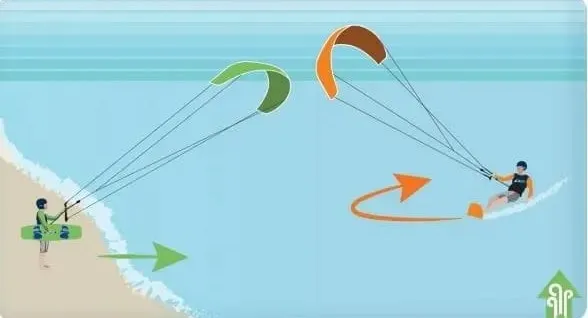
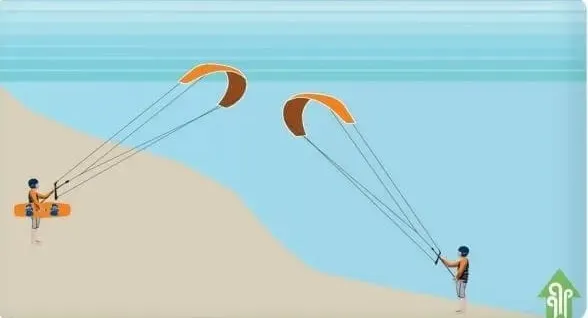
Launching from the beach has right of way
A kiter launching from the beach has right of way over kiters on the water. Give launchers room and do not ride close along the shore.
Launch — right of way over — On the water
03
Kite on starboard gives way to port
When two kiters meet, the one flying the kite on the port side (left) has right of way: wind from the right, right hand forward; they fly the kite high. The one with the kite on starboard keeps clear: passing to leeward with the kite low.
Port — right of way over — Starboard
04
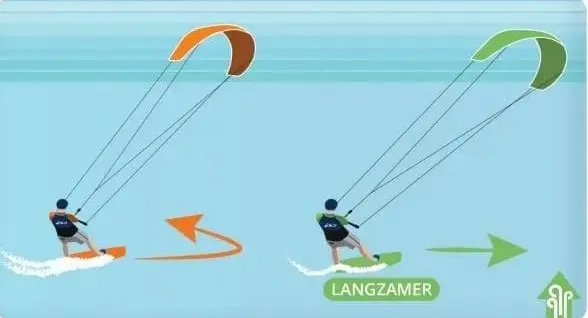
The slower kiter has right of way
Whoever is faster and catches up from behind keeps clear: turn away in time or pass at a good distance.
Slower — right of way over — Faster
05
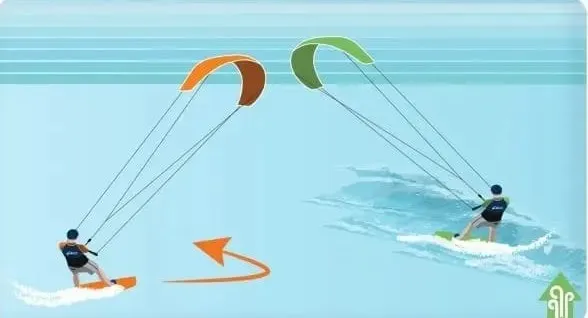
A kiter on a wave has right of way
Whoever rides a wave has right of way over kiters heading out or trying to catch the wave.
Wave — right of way over — Kiter
06
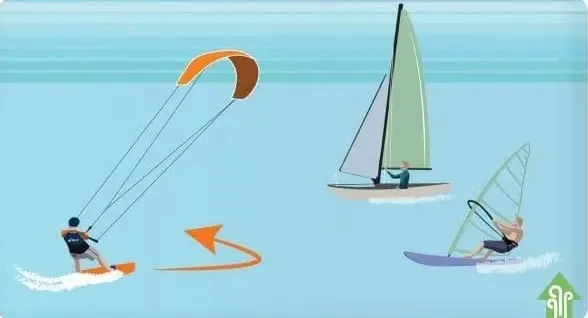
Other water users have right of way
Kiters keep clear of windsurfers, sailors, swimmers and everyone else on the water: kites need a lot of room and their lines are hard to see.
Others — right of way over — Kiter
07
Respect the safety zone when jumping
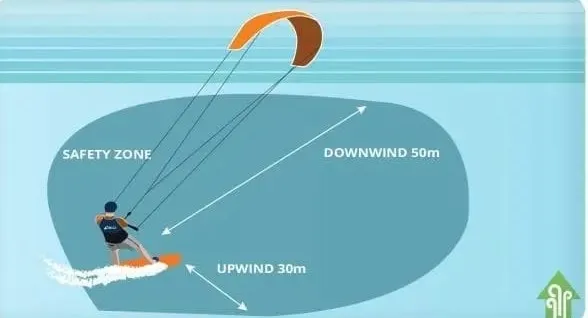
Only jump when 30 metres to windward and 50 metres to leeward are clear: no people, boats or obstacles.
30 m — and — 50 m
08
Good seamanship and common sense
Help others launch and land, give beginners room and raise problems in a friendly way. When in doubt: slow down and keep clear.